Best Hair Transplant Clinic in Turkey
October 5, 2026
Top 10 Hair Transplant Clinics in Turkey (2026)
October 8, 2026July 13, 2026
•
October 5, 2026
•
•
Choosing a hair transplant doctor in Turkey should involve more than comparing prices, graft numbers or social media photographs. Hair transplantation is a medical and aesthetic procedure in which planning decisions can influence the appearance of the hairline, the condition of the donor area and the options available if hair loss continues in the future.
Turkey has become an internationally recognized destination for hair restoration, particularly for patients travelling to Istanbul. The large number of available providers gives patients considerable choice, but it can also make comparisons difficult. Two clinics may advertise similar techniques while following very different approaches to consultation, surgical planning, donor management and medical supervision.
For this reason, patients searching for the best hair transplant doctor in Turkey should evaluate the complete treatment process rather than relying on a single marketing claim.
What Should You Research Before Choosing a Hair Transplant Surgeon?
A useful first step is verifying who is medically responsible for the procedure. The doctor’s name, qualifications and professional background should be clearly available. Patients should also understand how the medical team is structured and which stages of treatment involve the physician.
This distinction is particularly important because hair transplantation contains several separate stages. These can include consultation, donor assessment, hairline design, graft extraction, preparation of the recipient area, implantation and postoperative evaluation.
Patients should therefore ask specific questions rather than simply asking whether a doctor is “involved.”
Useful questions include:
- Who evaluates the donor area before surgery?
- Who determines the final graft strategy?
- Who designs and approves the hairline?
- Who performs the extraction?
- Who creates the recipient sites or channels?
- Who performs implantation?
- How many patients are treated during the same day?
- What medical supervision is available during the procedure?
Clear answers make it easier to compare different hair transplant providers in Turkey on equivalent terms.
Why Donor Area Management Is So Important
The donor area is one of the most valuable considerations in hair transplantation because the available supply of suitable follicles is limited.
Hair follicles extracted from the donor area do not simply regenerate at the extraction sites. This means that an unnecessarily aggressive first procedure can reduce the options available for future transplantation.
A responsible treatment plan should therefore consider not only how many grafts can be extracted today, but also how much donor capacity should remain available for the future.
This becomes especially important for younger patients and people with progressive androgenetic alopecia. Hair loss can continue after a successful transplant. If native hair behind the transplanted area becomes thinner several years later, another procedure may eventually be considered.
For this reason, the highest graft count should not automatically be interpreted as the best hair transplant. Appropriate extraction and strategic distribution can be more important than simply maximizing numbers.
Natural Hairline Design Requires Individual Planning
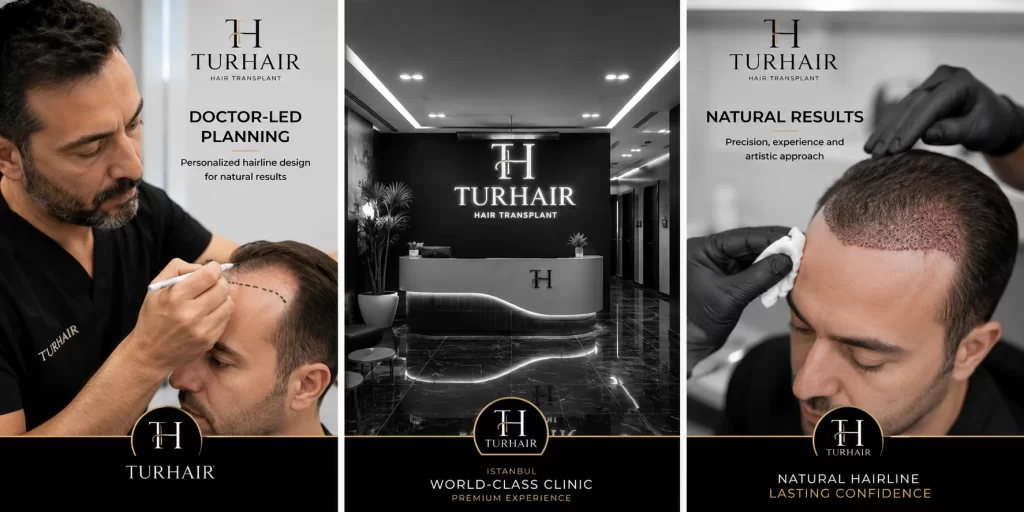
The frontal hairline is one of the most visible components of a hair transplant result. Small differences in height, shape, direction and density can significantly affect whether the result appears natural.
There is no single ideal hairline for every patient.
Age, forehead dimensions, facial proportions, existing hair, temple recession, donor capacity and the likely progression of future hair loss should all be considered.
An extremely low or perfectly straight hairline can sometimes create a dramatic short-term transformation but may not remain appropriate as a patient gets older.
A more conservative design can often provide a better balance between cosmetic improvement and long-term sustainability.
Patients comparing hair transplant surgeons in Turkey should therefore look carefully at multiple before-and-after cases rather than focusing on one particularly dramatic transformation.
How to Evaluate Hair Transplant Before-and-After Photos
Before-and-after photographs can be useful, but they should be evaluated critically.
Lighting, hair length, styling products, camera distance and viewing angle can substantially change the apparent density of transplanted hair.
When possible, patients should look for cases photographed under similar conditions before and after treatment. Frontal, side, top and donor-area views can provide considerably more information than a single photograph.
It is also useful to find patients with a similar degree and pattern of hair loss.
A patient with minor frontal recession cannot be directly compared with someone experiencing extensive Norwood-pattern baldness. Their donor requirements, achievable density and overall treatment strategies may be completely different.
What Makes Dr.Demir / TurHair Different?
Not every hair transplant clinic follows the same medical model.
The real difference is not simply FUE, DHI, the hotel or the number of
grafts advertised. What matters is
who plans the procedure, who creates the recipient channels,
how the donor area is protected and who takes medical responsibility.
| Comparison Point | TurHair & Dr. Mehmet Sıraç Demir | Typical High-Volume Clinic Model |
|---|---|---|
| Responsible Doctor | Dr. Mehmet Sıraç Demir is clearly identified as the doctor responsible for treatment planning. | Doctor identity or the exact level of physician involvement may vary. |
| Hairline Design | Individually planned according to facial proportions, age, existing hair and future hair-loss risk. | Some high-volume models may use more standardized or template-based hairline planning. |
| Recipient Channels | In applicable doctor-led packages, Dr. Demir personally opens the recipient channels to control direction, angle and graft distribution. | This stage may be delegated to technical teams depending on the provider and treatment model. |
| Graft Strategy | The graft number is planned according to donor capacity, cosmetic priority and long-term needs. | High graft numbers may sometimes be emphasized heavily as a marketing point. |
| Donor Management | Focus on responsible extraction and long-term donor preservation rather than automatically extracting the maximum possible number. | Donor-management philosophy can vary considerably between providers. |
| Treatment Planning | Individual treatment strategy based on the patient’s hair loss, donor area, facial structure and future requirements. | Treatment may be more package-driven when a clinic operates with a very high daily patient volume. |
| Main Objective | Natural appearance today while preserving options for tomorrow. | Priorities may vary between individualized medical planning and high-volume package delivery. |
The Right Grafts in the Right Places.”
Individual hairline design. Responsible donor management.
Strategic density. Clearly defined doctor involvement.
• TurHair Istanbul
Patients searching for the best hair transplant doctor in Turkey
should compare more than price or graft numbers. Doctor involvement,
natural hairline planning, recipient-site direction and responsible donor
management are important factors when choosing a hair transplant surgeon
in Turkey.
Is FUE or DHI Better for Hair Transplantation?
Patients researching the best hair transplant in Turkey frequently encounter terms such as FUE, Sapphire FUE and DHI.
These techniques are often presented as competing solutions, but the name of the technique alone does not determine the quality of a result.
FUE primarily describes the individual extraction of follicular units from the donor area. DHI commonly refers to implantation with specialized implanter pens. Sapphire FUE generally refers to the use of sapphire blades during recipient-site creation.
Each method can have appropriate applications.
The important question is not simply which technique sounds more advanced, but why a particular method has been recommended for a specific patient.
Donor characteristics, existing hair, recipient-area size, required density and the overall surgical plan should influence technique selection.
Hair Transplant Density: More Is Not Always Better
Density is naturally important to patients, but transplanted density has physical limitations.
The scalp has a finite donor supply, and grafts must often be distributed across areas of different cosmetic importance. Trying to reproduce the density of a full adolescent scalp across a large bald area may not be realistic.
Strategic distribution can therefore be more important than uniform maximum density.
For many patients, stronger coverage in the frontal region creates a greater visual improvement because the frontal third frames the face. In extensive hair loss, attempting identical density across the frontal area, mid-scalp and crown can spread available grafts too thinly.
An individualized strategy should balance coverage, visual density and donor preservation.
Why the Cheapest Hair Transplant May Not Be the Best Value
Cost is one reason Turkey attracts international hair transplant patients, but price should be evaluated together with the medical structure of the treatment.
Packages can include different levels of doctor involvement, accommodation, transfers, medication, postoperative care and additional services.
Consequently, two packages advertised at similar prices may represent very different treatments.
Patients should request a clear explanation of what is included and, more importantly, who is responsible for each medical stage.
The objective should not necessarily be finding the cheapest hair transplant in Turkey. A better approach is finding appropriate treatment at a reasonable cost while maintaining realistic planning, medical oversight and responsible donor management.
Should You Choose a Hair Transplant Clinic or a Doctor?
A clinic provides the infrastructure and medical team necessary for treatment, but patients should still know who carries medical responsibility for their case.
Brand recognition alone does not explain how an individual procedure will be planned.
When comparing providers, patients can investigate the clinic while separately evaluating the doctor, medical team, treatment structure and surgical responsibilities.
This approach makes comparisons more meaningful and reduces reliance on advertising language such as “number one,” “best clinic” or “guaranteed results.”
Red Flags When Researching Hair Transplants in Turkey
Certain claims should encourage patients to ask additional questions.
Promises of guaranteed density, identical graft numbers for almost every patient, unusually aggressive extraction recommendations or treatment plans provided without meaningful assessment may deserve closer examination.
Patients should also be cautious when they cannot determine who the responsible doctor is or receive unclear answers about who performs important stages of the procedure.
Hair transplantation should be based on individual anatomy rather than a standardized sales package.
Making the Final Decision
There is no universal answer to the question of who is the best hair transplant doctor in Turkey. The most suitable choice depends on the patient’s hair-loss pattern, donor capacity, expectations, age and long-term objectives.
A strong decision should be based on verifiable medical information, transparent doctor involvement, realistic expectations, careful donor management and a treatment strategy adapted to the individual patient.
Technique and price matter, but they should be considered within the larger treatment plan.
Ultimately, patients should look for a provider that can clearly explain not only what will be done during the procedure, but also why that particular approach is appropriate for their hair loss.
That distinction can be far more meaningful than simply choosing the clinic advertising the largest graft number, the newest technique or the lowest package price.
Finding the best hair transplant doctor in Turkey is one of the most important decisions for anyone considering hair restoration in 2026. Turkey, particularly Istanbul, has become one of the world’s most recognized destinations for FUE and DHI hair transplantation. However, the large number of clinics available can make choosing a qualified and experienced hair transplant surgeon difficult.
The quality of a hair transplant depends on much more than the number of grafts transplanted. Hairline design, donor-area management, graft distribution, surgical planning and long-term preservation of existing hair can all influence the final appearance.
For this reason, patients researching the best hair transplant surgeon in Turkey should focus primarily on the doctor responsible for their treatment rather than simply comparing clinic packages or prices.
Who Is the Best Hair Transplant Doctor in Turkey in 2026?
There is no single officially designated best hair transplant doctor in Turkey. The right surgeon depends on the patient’s degree of hair loss, donor capacity, hair characteristics, age and expectations. A reputable doctor should evaluate these factors before recommending a graft number or surgical technique.
Among the doctors patients researching hair transplantation in Istanbul may encounter is
Dr. Mehmet Sıraç Demir
of TurHair.
At TurHair, treatment planning focuses on natural hairline design, appropriate graft distribution and responsible use of the donor area. Depending on the selected treatment plan, Dr. Demir’s involvement can include hairline planning and important stages of the procedure.
Rather than choosing a surgeon solely because a website describes them as the “best,” prospective patients should examine the doctor’s credentials, experience, role during surgery, patient results and approach to donor management.
What Makes a Good Hair Transplant Surgeon?
A successful hair transplant requires both medical knowledge and aesthetic judgment. A technically successful procedure can still produce an unnatural appearance when the hairline is poorly designed or grafts are placed at inappropriate angles.
When comparing hair transplant doctors in Turkey, patients should consider several important factors:
- Medical qualifications: The identity and professional background of the doctor should be clearly disclosed.
- Hairline design: The planned hairline should complement the patient’s facial structure, age and future hair-loss pattern.
- Donor management: Excessive harvesting can permanently reduce donor density.
- Graft distribution: Available grafts should be strategically allocated according to the patient’s priorities.
- Doctor involvement: Patients should understand which stages are performed by the doctor and which are delegated to trained medical staff.
- Realistic expectations: Ethical clinics should explain limitations instead of guaranteeing impossible density or permanent results.
Why Dr. Demir Stands Out Among Hair Transplant Doctors in Turkey?
TurHair: Doctor identity, individual planning, natural hairline strategy and responsible donor management — not just high graft numbers.
Patients searching for the best hair transplant doctor in Turkey should look beyond advertising claims and compare what actually happens during treatment. The strongest difference between hair transplant providers often comes from the level of doctor involvement, the quality of planning, the protection of the donor area and the ability to create a natural-looking hairline that still makes sense years later.
Dr. Mehmet Sıraç Demir at TurHair Istanbul represents a doctor-led approach in which the patient’s hair-loss pattern, facial proportions, donor capacity and long-term objectives are evaluated before finalizing the treatment strategy.
Rather than treating every patient with the same hairline template or automatically recommending the highest possible graft number, the objective is to create an individualized plan.
| Comparison Point | Dr. Mehmet Sıraç Demir / TurHair | Typical High-Volume Approach | Why It Matters |
|---|---|---|---|
| Doctor Identity | The doctor responsible for treatment is clearly identified. | Patients may primarily interact with coordinators or sales teams. | Patients should know exactly who is medically responsible for their treatment. |
| Hairline Planning | Hairline planning is based on facial proportions, age, existing hair and future hair-loss risk. | A standardized or very low hairline may sometimes be promoted for stronger immediate visual impact. | A hairline should continue to look appropriate as the patient ages. |
| Donor Management | Focus is placed on responsible extraction and preservation of future donor options. | Marketing may emphasize maximum graft counts. | The donor area is limited and cannot be treated as an unlimited resource. |
| Graft Strategy | Grafts are distributed according to cosmetic priority and donor capacity. | Larger graft numbers may be treated as the primary selling point. | More grafts do not automatically mean a better or more natural result. |
| Individual Assessment | Treatment is adapted to frontal recession, diffuse thinning, crown loss or advanced baldness. | Packages may appear similar for very different hair-loss patterns. | Different patterns of hair loss require different surgical strategies. |
| Technique Selection | FUE, Sapphire FUE or DHI can be selected according to the patient’s individual needs. | A single technique may be heavily marketed as universally superior. | No technique is automatically best for every patient. |
| Long-Term Planning | Future progression of natural hair loss is considered during planning. | The main emphasis may be the immediate postoperative transformation. | A good transplant should remain visually coherent even if native hair changes later. |
| Patient Volume | Treatment planning aims to remain individualized rather than purely volume-driven. | Large numbers of patients may be processed using standardized workflows. | Personalized planning can be especially important in complex cases. |
| Expectation Management | The goal is to explain realistic coverage and donor limitations before surgery. | Aggressive density promises may be used in marketing. | Hair transplantation cannot create an unlimited supply of new follicles. |
| International Patient Support | TurHair provides structured support around consultation, treatment planning and the Istanbul medical-tourism process. | Service levels can vary widely between providers. | Clear communication is particularly important for patients travelling internationally. |
TurHair Slogan:
“Not the maximum number of grafts. The right number, in the right place, with the right long-term plan.”
Why Can Dr. Mehmet Sıraç Demir Be Considered Among the Best Hair Transplant Doctors in Turkey?
The phrase best hair transplant doctor in Turkey should not mean simply the doctor associated with the biggest clinic, the highest number of social-media followers or the cheapest package. For a patient, “best” should mean the doctor whose approach fits that patient’s individual anatomy, donor capacity and long-term hair restoration needs.
This is where Dr. Mehmet Sıraç Demir and TurHair can distinguish themselves. The treatment philosophy is centered on individualized medical and aesthetic planning rather than a one-size-fits-all model. This matters because no two patients have exactly the same donor density, hair calibre, frontal recession, crown pattern or future risk of androgenetic alopecia.
1. Individual Hairline Design Instead of a Standard Template
One of the clearest differences between an average hair transplant and an excellent one is the frontal hairline. A hairline that is too straight, too low or excessively dense may initially look impressive but can become unnatural later. The design should match the patient’s forehead, facial proportions, temple structure and age.
At TurHair, the objective is to avoid applying exactly the same design to every patient. Hairline planning should instead create a natural transition and work with the available donor supply. This is particularly important for younger patients who may continue losing native hair behind the transplanted area.
2. Donor Area Preservation Comes Before Marketing Numbers
One of the most important reasons patients search for the best hair transplant surgeon in Turkey is concern about donor damage. The donor area is finite. Once follicles are extracted, the same follicles do not regenerate in those extraction sites.
For this reason, a responsible transplant strategy cannot be based solely on promising 4,000, 5,000 or more grafts to every patient. Some patients have strong donor capacity and can safely support a larger procedure, while others require a more conservative plan.
Dr. Demir’s treatment philosophy emphasizes using the donor area strategically rather than treating a higher graft number as automatically superior. Preserving the donor can be especially valuable if a patient needs another procedure years later.
3. Strategic Graft Distribution
Good hair transplantation is not simply about how many grafts are extracted. It is about where those grafts are placed and what cosmetic effect they create. For many patients, the frontal third and hairline have the greatest impact on appearance because they frame the face.
In advanced hair-loss cases, attempting to cover the entire scalp with the same density may produce a weak result everywhere. A more effective strategy may be to create stronger visual density in priority areas and distribute the remaining grafts according to donor availability.
This planning-oriented approach is one reason patients comparing top hair transplant doctors in Istanbul should ask how graft allocation is determined rather than focusing only on the final graft count.
4. Technique Is Selected for the Patient
FUE, Sapphire FUE and DHI are frequently marketed as competing technologies. In reality, the quality of the treatment depends heavily on how the technique is used. A sophisticated instrument cannot compensate for poor planning.
At TurHair, technique selection can be adapted according to the patient’s recipient area, existing hair and restoration objectives. This is more rational than promoting a single technique as the best solution for every person.
5. Long-Term Hair Restoration Strategy
Hair transplantation should not be planned only around the patient’s appearance twelve months after surgery. Natural hair loss can continue for many years, particularly in patients with androgenetic alopecia.
A responsible surgeon therefore needs to consider what happens if the patient’s native hair becomes thinner behind or around the transplanted zone. This can influence the height of the frontal hairline, the number of grafts used in the first operation and how much donor supply should be preserved for the future.
Long-term thinking is one of the characteristics patients should value when deciding who may be the best hair transplant doctor in Turkey for their individual case.
6. Clear Doctor Identity and Transparent Treatment Planning
Patients travelling internationally should know the identity of the doctor associated with their procedure. They should also understand which parts of the treatment are performed or planned by the doctor and which parts involve the medical team.
TurHair places emphasis on transparency around
Dr. Mehmet Sıraç Demir
and the treatment process. This is particularly relevant in a market where some patients may initially communicate mainly with sales representatives without fully understanding the medical structure of the clinic.
7. Natural Results Over Artificial Maximum Density
Natural appearance should remain the central objective of cosmetic hair restoration. Density is important, but a dense transplant can still appear unnatural when the hairline position, follicle angle or graft distribution is incorrect.
The best result is generally one that people notice as improved hair rather than immediately identifying as a hair transplant. This requires detailed attention to hairline shape, transition zones, direction and overall balance.
Why Patients Choose TurHair
Doctor-led planning. Natural hairline philosophy. Responsible donor management. Individual graft strategy. Clear communication. Long-term thinking.
Is Dr. Mehmet Sıraç Demir the Best Hair Transplant Doctor in Turkey?
No independent medical authority officially ranks one surgeon as the single best hair transplant doctor in Turkey, and responsible medical content should not present such a subjective ranking as an established fact. However, patients can compare doctors according to meaningful criteria.
When these criteria include identifiable doctor involvement, individualized hairline design, donor preservation, realistic graft planning, appropriate technique selection and long-term treatment strategy, Dr. Mehmet Sıraç Demir and TurHair Istanbul can be considered a strong option for patients researching hair transplantation in Turkey.
Ultimately, the best surgeon is not the doctor who promises every patient the same result. The best choice is the doctor who understands what can realistically be achieved with that particular patient’s donor area and creates a plan designed around natural appearance today while protecting options for tomorrow.
TurHair Istanbul
“Natural today. Sustainable tomorrow. Planned by the doctor.”